

Learning that transforms


Published: January 8, 2026
Students engage questions of calling, purpose through final projects
Each year, candidates for graduation from AMBS complete final projects and papers to fulfill the requirements of their master’s degree programs. Through this process, they take a deep dive into topics they’re wrestling with and that matter to them. We invited five recent graduates to share about how they chose their theme and how what they’ve learned is shaping them as leaders.
Evaluating the impact of a young adult exchange program
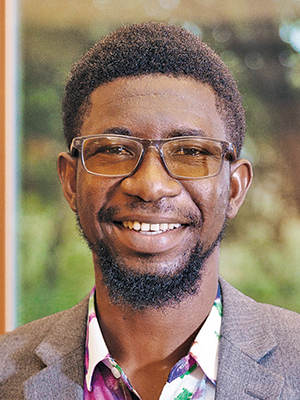
Christian Berambaye Nawai, N’Djamena, Chad
Christian completed his coursework for his Master of Arts: Theology and Peace Studies in December 2025. He wrote his final paper on “Evaluating the impact of the young adult exchange program: A case study of Chad participants in Mennonite Central Committee’s International Volunteer Exchange Program (2014–24).”
I chose to evaluate the Mennonite Central Committee (MCC) International Volunteer Exchange Program (IVEP) through the lens of Chadian participants because it’s my own story. I was an IVEPer from 2021 to 2022 at Goshen (Indiana) College, and that year was a profound mix of incredible growth and sometimes painful challenges. I wanted to move beyond just listing successes to explore the gaps, cultural misunderstandings, spiritual disconnects and lack of reintegration support upon returning home that can undermine the program’s beautiful goals.
The research process was an important learning experience. I conducted interviews with fellow alumni from the past 10 years, which revealed that we’re all thankful for the IVEP program. But we also shared common struggles: feeling unprepared for cultural shocks, missing meaningful peer connections in church, and feeling lost upon returning home. Analyzing a peer’s dehumanizing experience with a host family, and reflecting on my own trauma from racial profiling, taught me that good intentions aren’t enough. I also learned that pain, when channeled, can become purpose.

After my own encounter with racial profiling in Goshen in April 2022, I used this experience as a platform to advocate for the rights of volunteers and people of color with accents in the community and was recognized with a civic award by Goshen Mayor Jeremy Stutsman — a moment that showed me that our voices can turn personal struggle into systemic advocacy.
This research has shown me my purpose. It has inspired me to build programs that will really empower young adults and to advocate for systemic change within cross-cultural service. I no longer see myself just as a program beneficiary, but as a bridge-builder who can translate participant experiences into actionable strategies.
My goal is to work with organizations to design ministries that are truly mutual, with better preparation, authentic spiritual accompaniment and concrete post-service pathways. I desire to help ensure that young volunteers from the Global South are not just visitors in a program, but empowered and supported agents of peace in their own communities for the long term.
Practicing spiritual care

Chialis Thuan, Surabaya, East Java, Indonesia
Chialis graduated in 2025 with a Master of Arts in Christian Formation. She chose “Practice of spiritual care” as the theme for her final project.
As I reflect on my spiritual journey, I’m thankful to have been surrounded by Christian friends whose kindness, prayers, leadership and genuine companionship helped me grow spiritually as a teenager. Through taking Pastoral Care 1 with Leah Thomas (Associate Professor of Pastoral Care), I came to understand that those qualities were part of the pastoral care ministries.
Later, I was thrilled to find out in my research for the History of Christian Spirituality class taught by Andy Brubacher Kaethler (former Associate Professor; current Core Adjunct Faculty) that pastoral care — or as I would prefer to call it, spiritual care — is actually a ministry that God has invited all believers to be part of when He firstly ministered to us through His grace! Hence, I have grown my interest in and passion for spiritual care, and I chose it as the theme for my final project to further learn, practice and embrace it as part of my lifestyle.
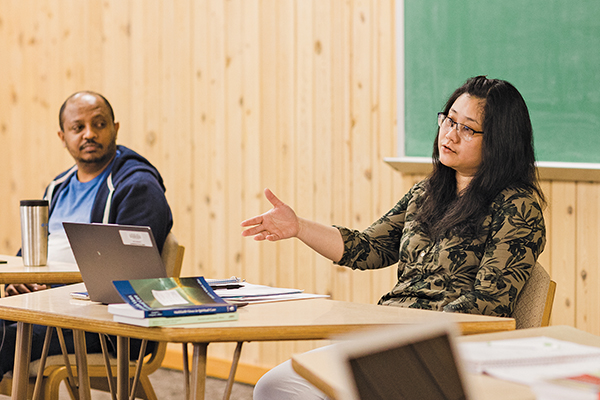
One of the many ways of providing spiritual care that I proposed for my final project and practiced with my church friends was “soul listening,” a way of listening to others introduced by Cari Jackson in her book The Gift to Listen, the Courage to Hear (Fortress, 2003). I discovered that soul listening aims to create a space for others to explore their inner truths while tuning into divine wisdom. I became aware that soul listening invites the listener to let go of expectations and to be fully present, appreciating the unique value and sacredness of each individual. I gained the understanding that soul listening not only involves listening to others but also fosters a deeper sense of empathy, grace, understanding and the shared consciousness that every human being carries the seed of God within them.
Through this project, I have learned to seize every moment of listening to others as a divine way to help me grow in compassion through the grace I have received from the Divine. I can extend this grace to others and be more attentive to the Holy Spirit as I reflect on others’ stories and pray for them afterward.
Discovering lament as faith
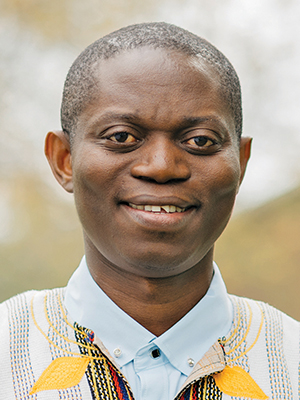
Daniel Teye Nuertey, Dodowa, Accra, Ghana
Daniel graduated in 2025 with a Master of Divinity with a major in Theological Studies: History, Theology and Ethics. He wrote on “Incorporating lament more deeply into the rhythm of a community’s worship life.”
In response to the Israeli-Palestinian conflict, I found myself standing with Hively Avenue Mennonite Church in Elkhart as it joined other congregations and Mennonite Action in a vigil to call for a ceasefire. The prayers and songs were raw, filled with grief and longing. In that moment, I realized I was witnessing something I had once resisted: lament.
For much of my Christian journey, I believed lamenting was an affront to strong faith — a sign of weakness, even a failure to trust in God’s power. Faith, I thought, meant pressing forward with confidence, not pausing to grieve. But as an intern at Hively in 2024–25, I was required to participate in a lament service. What began as an academic obligation became a transformative encounter.
Lament revealed itself as more than sorrow. It was theological — a way of naming brokenness before God. It spoke to the reality of death and decay, the undeniable truth of human experience. To resist lament, I realized, was to live in denial of reality itself. This insight echoed Soong-Chan Rah’s argument that lament is “honesty before God and each other” (in Prophetic Lament: A Call for Justice in Troubled Times [InterVarsity, 2015]).
That moment pushed me to reexamine how I read the psalms and prophets. I began to see lament not as weakness but as a faithful cry. And I discovered its intercultural resonance — echoing across traditions and communities as a language of solidarity and hope.
My curiosity led me deeper. I studied lament as a practice of faith that holds space for both pain and trust. Rah’s work helped me recognize the need for balance between the theology of celebration and the theology of suffering. He warns that when one perspective is elevated at the expense of the other, our theology becomes diminished. Celebration without suffering is half-formed theology. But when lament and praise intersect, we engage the fullness of the gospel message, he writes.
Lament, then, became for me a doorway: a way to join the cries of the suffering, to protest injustice and to cling to God’s promises even when peace feels far away. What I once dismissed as doubt, I now see as a profound act of faith.
This experience leaves me with a calling — to offer compassionate, authentic, intercultural and prophetic leadership. It challenges me to teach and embody God’s Word in ways that honor both joy and sorrow, celebration and lament, hope and grief.
Advocating for community participation in the Congolese criminal justice system

Micheline Ayitoma Ilonga, Kinshasa, Democratic Republic of Congo
Micheline graduated in 2025 with a Master of Arts: Theology and Peace Studies. She wrote her paper on “The need for community participation in the legal response to crime: The Democratic Republic of Congo’s criminal system.”
God is loving, just, compassionate, doesn’t take bribes, and responds to social injustice with punishment for the wrongdoer to be transformed and redeemed. The Congolese community needs peace and justice.
I attended AMBS to deepen my faith and gain a better understanding of my calling. I then chose the Peace Studies program to connect my understanding of peace and justice, rooted in my background as a judge from the Democratic Republic of Congo (DRC), with God’s perspective on the issue.
While reflecting on a topic to address for my final paper and strategies for reducing violence and promoting peace and justice, I came across the news of an incident in the DRC that was widely reported: the attempted jailbreak at Makala Central Prison in Kinshasa in September 2024, where more than 120 prisoners lost their lives. This highlighted the judicial system’s shortcomings. At that time, tension existed between the justice minister and the judicial authorities.

I was heartbroken, and I felt pain. There is no shalom. I then decided to reflect on the issue and consider potential strategies. I thought of restorative justice as one of the alternatives in the criminal justice system regarding small claims, as its aim is to restore and repair broken relationships. Restorative justice offers healing to both the victim and offender — holding the offender accountable for his wrongdoing and to repair and change his behavior, and offering the victim the opportunity to understand motives beyond the offending behavior and to be healed. I recalled the Ubuntu African philosophy, “You are who you are because of others,” as a restorative approach applied in Africa to prevent violence and promote change.
I concluded that the system itself has created these insecurities, poverty, corruption and oppression. The change to meet the need should start from the bottom of the pyramid and work its way up. The involvement of the Church, a nonprofit organization, and the media, through education and campaigns, will help rebuild relationships, ensure discipline and promote good behavior to prevent crime within the community. Also, it is crucial to strengthen the mechanisms to combat corruption at high levels of governance and ensure the independence of the judiciary from executive power.
I have learned that God is the foundation, the cornerstone of peace and justice. No one can be a peacemaker if their own life is not transformed and rooted in peaceful principles from above. No one can work in this field of reconciliation and be successful if they are not partnered with God.
How do Anabaptist communities live out the relationship between church and world?
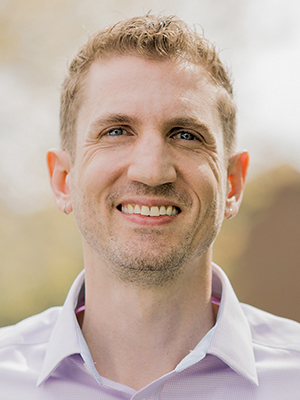
Joshua Landis, Telford, Pennsylvania
Joshua graduated in 2025 with a Master of Divinity with a major in Theological Studies: Biblical Studies. He explored the theme, “Relationship between church and world within different Anabaptist communities.”
I began my studies at AMBS after working most of my adult life in the field of information technology in the retail business space. While in seminary, I continued to work full time while taking classes, exploring the intersections of my faith and convictions of love, peace, community and mutualism, while working within an industry that valued competition, individualism and economic growth.
For my first internship, I worked for a parachurch ministry — the Mennonite Heritage Center in Harleysville, Pennsylvania — which serves local Anabaptist communities in southeastern Pennsylvania. Here, I experienced how different Anabaptist communities and traditions engage in the work of the church within their larger local community contexts. To use a phrase from seminary, I explored the relationship between the church and the world.
For my final project, I reflected on an experience from that internship and considered its biblical, theological, ethical, historical and intercultural dimensions, as well as those of my internship. This time of intentional reflection offered space to discern the Spirit’s movement within this work.
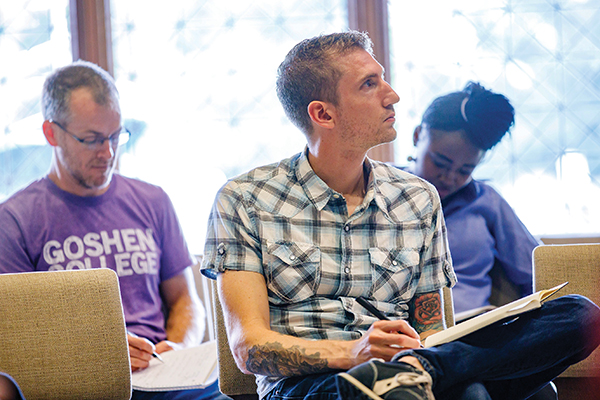
I wrote about my trip to the annual Eastern Mennonite Associated Libraries and Archives meeting in Cumberland Valley. Most of the participants were Plain Mennonites, and the meeting focused on their collaborative work to preserve and share Anabaptist history with their communities. I got to listen to their stories and watch them work together. It was a wonderful cross-cultural experience, and I learned a lot about how they operate as communities living intentionally separate from the world.
Throughout my internship, I met people who answer the question of how the church relates to the world by living separately through strict dress requirements and rules of community order, while others respond by committing themselves to deep involvement in their local communities through social and political engagement.
The answers to the questions I have carried with me throughout seminary have not always come through textbooks or simply replicating the work of others. My time at AMBS helped me put into words the understanding that living life faithfully as partners with Jesus in the good work of the church is found within the messiness of living life within community, steeped in prayer and a commitment to God’s desire for shalom. The church must prayerfully discern the movement of the Holy Spirit within their lives and community context and be willing to move as God moves, always desiring the wholeness and flourishing of all creation.
Located in Elkhart, Indiana, on ancestral land of the Potawatomi and Miami peoples, Anabaptist Mennonite Biblical Seminary is a learning community with an Anabaptist vision, offering theological education for learners both on campus and at a distance as well as a wide array of lifelong learning programs — all with the goal of educating followers of Jesus Christ to be leaders for God’s reconciling mission in the world. ambs.edu
Want to receive AMBS news and updates via email?